
Rebekah Jones is an award-winning and internationally celebrated scientist turned whistleblower currently serving as the lead Climate and Ocean Science Advisor to Project Zero, a UN-backed NGO, and on the advisory board to the Maryland Clean Energy Center.
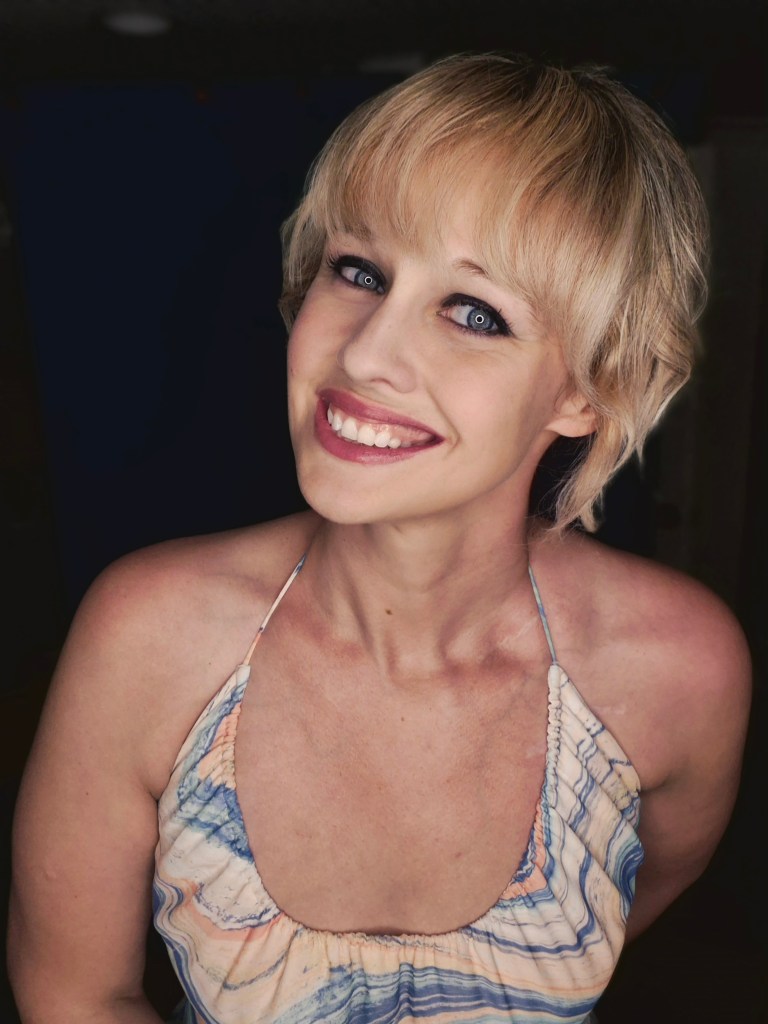
Rebekah studied earth science with a dual major in journalism at Syracuse University for her undergraduate degree, as well as her Master of Science degree at Louisiana State University, and her doctoral studies at Florida State University.
Rebekah’s work tracking COVID-19 in Florida earned international praise, and her advocacy for data access and transparency won her Forbes’ Technology Person of the Year and a nomination for Nature’s John Maddox Prize.
Rebekah now heads Mesoscale News, an independent science newsletter covering international crises, climate change, natural disasters, politics, and whistleblowing.
You can find her on Substack and all the other social media apps, where she’s amassed nearly one million followers and consistently reaches more than 10 million people each month.
Research and professional history.
As a scientist focused on the intersection of people and the environment, I have focused my academic and professional careers on disaster research and communications.
The bulk of my research and practice centered around hurricanes and climate change, using geospatial science as a tool to study how storms and changing environmental systems impact the Earth’s surface. I’ve published my research in peer-reviewed journals, won multiple awards from academic organizations, and have been featured in several technical and academic articles for my development of spatial data tools and applications.
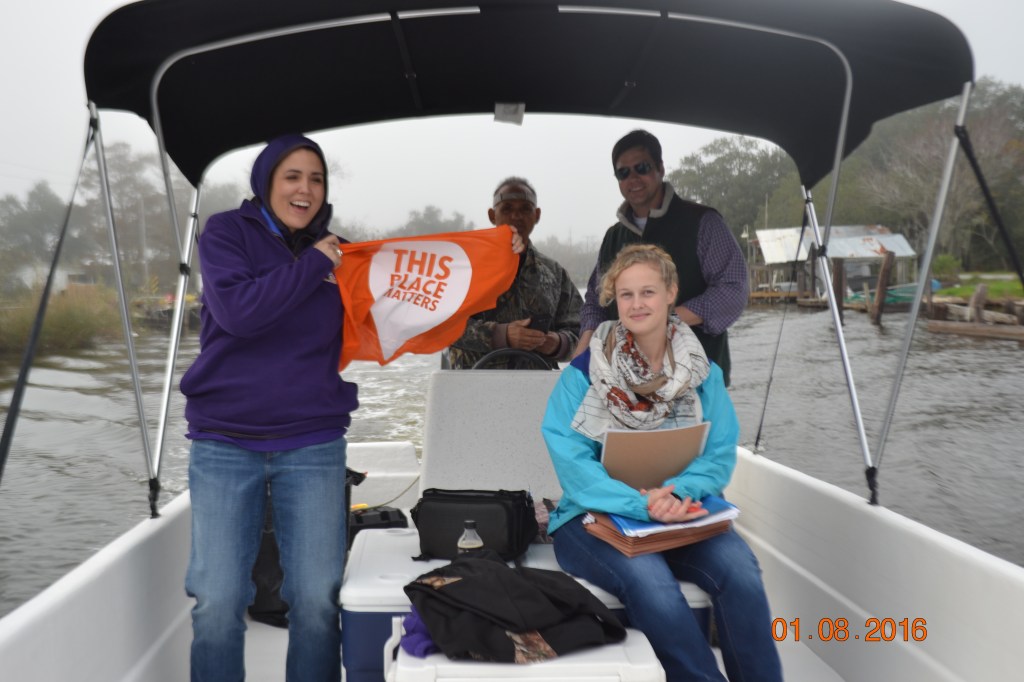
I also served as a climate and hurricanes subject matter expert for the 2014 Louisiana Hazards Mitigation Plan, contributed content to the 2014 National Climate Assessment, and worked with Native American tribes in south Louisiana on climate change and hurricane research, adaptation planning and action.
My work with the Pointe-au-Chien and Isle de Jean Charles tribes of south Louisiana inspired my doctoral research, which used previously-unmapped Native American sitescapes as proxies for catastrophic meteorological events predating European colonization.
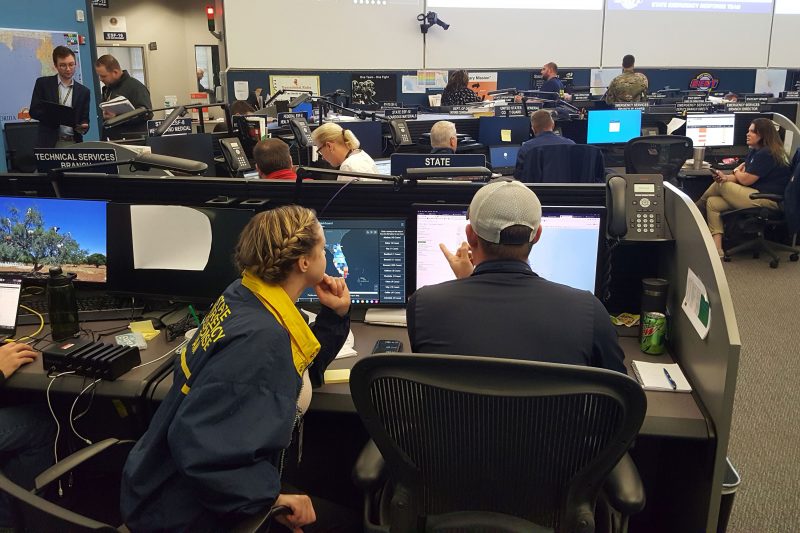
I’ve led or been a part of response efforts to Hurricane Isaac (2012), Hurricane Sandy (2012), the Moore, Okla. tornadoes (2013), Hurricane Hermine (2016), Hurricane Matthew (2018), and Hurricane Dorian (2019), as well as epidemiological work during two influenza outbreaks, a Hepatitis A outbreak, and COVID-19.
My award-winning Hurricane Michael storymap was presented at ESRI’s 2019 User Conference and served as a catalyst for my work in emergency management with the Florida Department of Health (FDOH).
In April 2020, my COVID-19 Data and Surveillance Dashboard, which I built while working as the Geospatial Information Sciences Manager at FDOH, received praise from White House Advisor Dr. Debora Birx, logged more than 100 million views within six weeks, and was hailed as the national gold-standard for data transparency and accessibility.
In June 2020, I founded Florida COVID Action to track and analyze all authoritative data about the COVID-19 pandemic in the state of Florida. Two months later, I co-founded The COVID Monitor, the only national database for COVID-19 case data in K-12 schools.
My efforts advocating for transparency during the pandemic earned me international recognition and awards, including nominations for the John Maddox Prize and the DAMA International Data Management Award for Excellence.
I also gave the keynote address at several major conferences, including the Association of American Geographers, Journal of Data Science, URISA, and Women in GIS, and built a substantial media portfolio as a science communicator and advocate.
My plan is to continue doing the important work I’ve been passionate about all my life – helping people understand the world, its risks, and be better prepared for what comes.
 Rebekah Jones
